Thursday, 10 May 2012

Esterfication!

- Esters are formed by the reaction of a carboxylic acid and an alcohol.

Nomenclature:
- Write down the side chain without the double bonded oxygen
- Have the side chain with the double bonded oxygen end in -oate
- Standard naming rules apply.


Examples:


- Esters also have distictive fruit-like odours!

Heres a video that futher explains Esters:

Friday, 4 May 2012

Amines, Amides, and Nitro!


                                                     Amines, Amides, and Nitro!


  1. Amines are functional groups that contain a Nitrogen compound bonded to either Hydrogens and Carbons.Also, amines are alphabetically named. There are three levels of Amines:
  • - Primary Amines have 1 carbon bond
  • - Secondary Amines have 2 carbon bonds
  • - Tertiary Amines have 3 carbon bonds


Ex.      


Ex.
  1. Draw the following for
  • 1) ethyl methyl amine

  • 2) trimethyl amine


Amides must have a double bonded oxygen and an NH2. The endings for Amides are "-amide".
 
One of the simplest amide is ethanamide.
 
Nitros have the funtional groupd of NO2. Also when naming a nitro, we add "Nitro" to the beginning of the name.


Monday, 30 April 2012

Aldehydes, Carboxylic Acids

In Today's class we learned about Aldehydes and Carboxylic Acids. Aldehydes are basically a double bonded oxygen at the end of a chain and Carboxylic Acids are formed the with a double bonded oxygen and an alchohol on the same carbon.

 Aldehydes:
  • Double bonded oxygen at the end of a chain
  • Follow the standard naming rules and change the parent chain ending to AL.
(be careful when naming aldehydes and alchohols.)
(Formaldehyde)

(ethanal)
(2 bromo heptanal)

e.g. 

Carboxylic Acids:
  • Follow standard naming rules but change the parent chain ending to -oic acid
(Methanoic Acid)

(Trichloro methanoic acid)


(4 methylbenzoic acid)

Thursday, 19 April 2012

Alicycles and Aromatics!

- Carbon chains can form two types of closed loops
- Alicyclics are loops usually made with single bonds
- Cyclo- is added in front of the parent chain. If a parent chain is a loop standard naming rules apply.

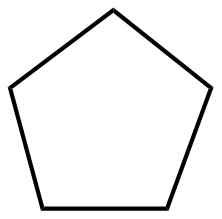
Cyclopentane
- Here are two ways to draw a cyclic.
Line Diagram
Condensed Structural Diagram

- Numbering can start anywhere and go Clockwise or Counterclockwise on the loop but side chain numbers must be the lowest possible.
Example:
1,3,5 trimethyl cyclohexane

- Loops can also be a side chain
- Some rules apply but the side chain is given a cyclo- prefix
Example:
2 cyclopropyl 2 pentene

Aromatics
- Benzene (C6H6) is a cyclic hydrocarbon. (Careful analysis shows that all C-C bonds are identical and really represent a 1.5 bond.

Examples of Benzene:

Aromatic Nomenclature
- Abenzene molecule is given a special diagram to show its unique bond structure
- Benzene can be a parent chain or a side chain.
- As a side chain it is given the name "Phenyl"

Examples:
1,2,3,4,5 pentamethyl benzene

1 bromo 4 phenyl butane

Monday, 16 April 2012

Alkenes and Alkynes: Double and Triple Bonds


                                       Alkenes and Alkynes: Double and Triple Bonds

          Today in chemistry class, we learned about double and triple bonds with Carbon atoms.


  1. Carbon can form double and triple bonds with Carbon atoms. When multiple bonds form, fewer Hydrogens are attached to the carbon atom. Naming rules are almost the same as with alkanes.

  • The position of the double/triple bonds always has the lowest number and is put in front of the parent chain.
  • Double bonds (Alkenes) end in -ene. Triple bonds (Alkynes) end in -yne.

          Ex.


   Ex.     


EX:

What is the name of this alkene?


What is the name of this alkyne?


Multiple Double Bonds:

More than one double bond can exist in a molecule. Use the same multipliers inside the parent chain.


Trans and Cis Butene:

If two adjacent carbons are bonded by a double bond and have side chains on them two possible compounds are possible.


Thursday, 12 April 2012

Organic Chemistry

In today's class we learned about the Nomenclature of Organic Chemistry which is the study of Carbon Compounds. Carbon can form multiple covalent bonds and can run like chains, rings or branches. There are less than 100,000 non organic compounds but over 17 million organic compounds. The simplest of the organic compounds are made of carbon and hydrogen. (refer to diagram below). Saturated compounds have no double or triple bonds. The compounds with only single bonds are called ALKANES and always end in ANE.

Nomenclature:

  • There are 3 categories of Organic Compounds
  1.  Straight Chains
  2. Cyclic Chains
  3. Aromatics
Straight Chains:
These are the steps you need to follow when naming straight chain compounds:
1. Circle the longest continous chain and name this as the base chain
 e.g. meth, eth, prop, but (meth-1, eth-2, prop-3, but-4, pent-5, hex-6, hept-7, oct-8, non-9 dec-10)
2. Number the base chain so the side chain have the lowest possible numbers
3. Name each side chain using the -yl ending
4. Give each side chain the appropriate number

5. List Side chains alphabetically
(2,2 dimethyl butane)

(3 methyl pentane)

(2,8 dimethyl decane)

Monday, 9 April 2012

Lab: Polar and Non-Polar Solvents

Polar and Non-Polar Solvents Lab

The objective of the was to determine if Glycerin is a polar or non-polar.

The materials we used for this lab were...
- test tubes, stoppers and rack
- scupula
- safety goggle and apron
- sodium chloride
- sucrose
- iodine crystals
- paint thinner
- Glycerin

During the lab we observed that when a polar solution mixes with another polar solution AND a non polar solution mixes with another non polar solution these solutions DISSOLVE!
while having to mix a polar solution with a non polar solution (vice versa) the solutions will NOT dissolve!

Monday, 2 April 2012

Intermolecular Bonds!

There are two types of Bonds: INTRAmolecular bonds and INTERmolecular bonds.

Intramolecular: Exist within a molecule such as Ionic and covalent bondings.
Intermolecular: Exist between molecules. There are two types of Intermolecular bonds: Van der Waals bonds and hydrogen bonds.

Van der Waal Bonds:
- This bonding is based on electron distribution.
- Dipole-Dipole bonds: positive is attracted to negative end. Only occurs in polar molecules.

London Dispersion Forces: (LDF)
- LDF is present in all molecules
- These are the weakest bonds
- If a substance is non-polar Dipole-Dipole forces doesn't exist.
- Electrons are free to move around and will randomly grouped on one side of the molecule.
- This creates a temporary dipole and can cause a weak bond to form.
- The more electronegativity in the molecules the stronger the LDF can be.

Hydrogen Bonding:
- If hydrogen is bonded to certain elements (F,O,N) the bond is highly polar
- This forms a very strong inermolecular bond.

Thursday, 29 March 2012

POLAR MOLECULES


Today in Chemistry class, we continues our discussion on Polar Molecules from last class.    
                     
        o       Polar Molecules have an overall charge separation.
        o       Unsymmetrical molecules are usually polar. 

              
o       Molecular dipoles are the result of unequal sharing of electrons in a molecule. A perfect example of this would be water bending, which Mr. Doktor demonstrated in class. Here’s a video showing it : 


o       If a molecule is symmetrical the pull of e- is usually balanced.
o       Molecules can be un-symmetrical in two ways :
*    Different Atoms
*    Different number of Atoms

-         Ex. Find the Polarity


Tuesday, 27 March 2012

Bonding and Electronegativity:

In today's class we learned about different types of bonds and also electronegativity. Electronegativity is just measure of an atom's attraction for electrons in a bond.

Types of bonds:
1. Ionic (metal-non metal)
    -electrons are transfered from metal to non-metal
2. Covalent (non metal- non metal)
    -electrons are shared between non-metals
3. metallic (metal)
    -holds pure metals together by electrostatic attraction

Electronegativity:
- Electronegativity is a measure of an atom's attraction for electrons in a bond
e.g. Fluorine=4.0, chlorine=3.0, cesium = 0.8
-atoms with greater Electronegativity attract electrons more
-polar covalent bonds form from an unequal sharing of electrons
-non-polar covalent bonds form from an equal sharing

Bonds:
-The type of bond formed can be predicted by looking at the difference in electronegativity of the elements
en>1.7 = ionic bond
en<1.7 = polar covalent bond
en=0 - non polar covalent bond
e.g.
Hydrogen - Oxygen
3.44-2.20= 1.24 (polar covalent bond)

Carbon - Hydrogen
2.55-2.20=0.35 (polar covalent bond)

Flourine - Potassium
3.98-0.82=3.16 (ionic bond)

Wednesday, 7 March 2012

Acid/Base Reactions!

Today in chemistry class we learned about pH and P0H, we also had visitors in class watching as we used our phones to text Mr. Doktor our answers for the in class problems.

Our 1st class problem was:


2000mL of 0.02 M NaOH represented our simulated lake and 150mL of 0.30 M HCl represented our simulated acid rain.

First we had to determine the pH of the acid rain and the pOH of the lake.

Determining the pH of the acid rain:

HCL -> H+ + Cl-

0.30 M x 1/1 = 0.30 M
-log(.30 = 0.52 = pH

Determining the pOH of the lake:

NaOH -> Na+ + OH-

0.02M x 1/1 = 0.02M
-log(0.02 = 1.7 = pOH

Determining the pH of the lake after acid rain has fallen on it:

HCl + NaOH -> NaCl + HOH

0.30mol/L x 0.150L = 0.045mol HCl

0.02mol/L x 2.00L = 0.04mol NaOH

0.045 - 0.040 = 0.005 mol

0.0050 x 1/2.15 = 0.002326M

-log(0.002326 = 2.6 = pH

Then we had to do another in class problem:


50.0mL of 0.150M H2SO4 reacts with 100mL of 0.100M Ba(OH)2


a) Determine the L.R.

H2SO4 -> 2H+ + SO4-2

0.150mol/L x 0.050L x 2/1 = 0.015mol of H, 0.015 x 1/2 = 0.0075mol of H2SO4

Ba(OH)2 -> Ba+ + 2OH-

0.100mol/L x 0.100L x 2/1 = 0.02mol of OH, 0.02 x 1/2 = 0.01mol of BaOH

H is L.R.


b) How much Ba(OH)2 is left after the reaction is completed

0.01 - 0.0075 = 0.0025 mol of BaOH is left

0.0025mol x 1/.150 = 0.017M


c) Determine the [Ba(OH)2] and [OH]

[Ba(OH)2] = 0.0025mol x 1/0.150 = 0.017M

[OH] = 0.017M x 2/1 = 0.034M


d) What is the pOH of the solution?

-log(0.034 = 1.48 = pOH


e) What mass of BaSO4 is produced?

0.0075mol x 1/1 x 233.4/1 = 17.5g of BaSO4

Monday, 5 March 2012

Ion Concentration

In this class we learned to determine the Ion concentration of compounds which is basically Dissociation.

-Ionic compounds are made up of 2 parts
-cation=positively charged particle
-anion=negatively charged particle
-When ionic compounds are dissolved in water the cation and anion separate from each other which is called dissociation
-When writing dissociation equations the atoms and charges must balance
-The dissociation of Sodium Chloride is:
NaCl (s) > Na+ (aq) + Cl- (aq)

-If the Volume does not change then the concentration of individual ions depends of the balanced coefficients in the dissociation equation.

Determine the ion concentration of a 0.56 M solution of Fe(OH)3
Fe(OH)3 > Fe3+ + 3OH-

0.56mol/L x 1/1= 0.56 M= FE3+
0.56mol/L x 3/1= 1.7M= OH-

Friday, 2 March 2012

Copper Chloride Lab

Today in class we had a lab where we had to create a solution of Copper Chloride with a concentration of O.1 M and then compare to samples Mr.Doktor set up. The solution that matched the solution you create (in terms of colour/shade) is the winner.

Materials:
Beaker
Graduated Cylinders
Stir Rod
Test Tube Stand
Water
Copper Chloride

Procedure:

Take about 5g of Copper Chloride and place it into a plastic dish
Take your plastic dish and pour the copper chloride onto a piece of wax paper
Take the wax paper and place it on your weighing scale
Weigh and record the total mass of the copper chloride
Put at least 25-50 mL of water in a graduated cylinder
Take an amount from the recorded amount of copper chloride with your scoopula
Put the same amount of copper chloride into the 25-50mL of water
Slowly stir the solution with a stir rod
Compare with Mr.Doktors solution and choose the closest shade of blue that matches yours
Repeat the procedure a few more times for consistent results

NECESSARY MATH:

0.050L/0.025L x (.1mol/L\) x (134.5g/mol) = ? g

Tuesday, 28 February 2012

Dilutions!

Dilutions are when two solutions are mixed making the conentration change. It is the process of decreasing the concentration by adding a solvent (usually water). Dilution can be expressed as the formula (n1 = n2) (C1V1 = C2V2.

To do a dilution problem, Mr. Doktor told us to always write down what we are given.

For Example:
"Determine the cocentration when 100mL of 0.10M Hcl is diluted to a final volume of 400mL"

Step 1: First write down all given data
Step 2: Manipulate the equation
Step 3: Plug in data to the variables
Step 4: Solve

V1 = 100mL V2=400mL C1=0.10M

(100)(0.1)/400 = 0.025M

Therefore the C2 is 0.025mol/L

<b> This video explains how to do indepth Dilution equation </b>

Friday, 24 February 2012

Titration of Vinegar Lab!


Today in Chemistry class, we did a lab to figure out the Molar Concentration of Acetic Acid in   household vinegar.
1. For the lab we set up a buret on a lab-stand with a clamp.
2. We filled the buret with 0.50M NaOH, and filled an Erlenmeyer flask with 10mL of vinegar and put two drops of Phenolphthalein Indicator in it. 
3. Then we recorded the initial volume of the NaOH in the buret, and then added the NaOH to the vinegar and swirled the flask until the solution turned light pink.
4. We then recorded the final volume to find the total amount of NaOH added in the trial.

   * We did this more than once.


Trial                                                1                           2

Initial Volume                              7.8                         24.2

 (mL)

Final Volume                               24.2                      40.8

 (mL)

NaOH Added                               17.0                    17.2

(mL)


 5. Then we got the average volume of NaOH added.
       17.0 + 17.2 / 2 = 17.1 mL
6. We finally determined the concentration of Acetic Acid using the balanced equation from the reaction of NaOH and CH3COOH.
NaOH + CH3COOH = H2O + NaCH3COOH
0.50mol/L x 17.1mL x 1/1 = 8.6mmol
8.3mmol x 1/10 mL = 0.86M
The accepted value for the concentration of household vinegar is 0.85M.
% error = 0.86 – 0.85 / 0.85 x 100 = 1% error.


For a better understanding of what we did today in class, here is a video demonstrating our lab.


Wednesday, 22 February 2012

Titration

In this class, We learned about titration which is an experimental technique used to determine the concentration of an unknwn solution.


In the Picture above:
-Buret= Contains the known solution to measure how much is added
-Stopcock= Valve used to control the flow of solution from the buret
-Pipet=used to accuratly measure the volume of unknown solution
-Erlenmeyer- container for unknown solution.
-Indicator- used to idetify the end point of the titration
-Stock Solution-known solution

e.g. Mike the mighty explorer completed a titration of 0.330M NaOH with 15.00 mL samgles of HI of unknown concetration. The data he gathered is below. Determine the concetration of HI.

0.330 mol/ L x 0.0112L x 1/1 x 1mol/ 0.015= 0.33M

Tuesday, 21 February 2012

Solution Stoichiometry

Solutions

Solutions are homogenous mixtures composed of a solute and a solvent
- Solute is the chemical present in lesser amount (whatever is dissolved)
- Solvent is the chemical present in greater amount (whatever does the dissolving)
Chemicals dissolved dissolved in water are aqueous
- NaCl(aq); H2SO4(aq)

Molarity

Concentration can be expressed in many different ways
- g/L, ml/L, % by volume, % by mass, mol/L
The most common (In Chemistry 11 & 12) is mol/L which is also called Molarity
- mol/L = M
- [HCl] = concentration of HCl

Molarity = Moles
Volume

Example:
- 100 mL of 0.250 M Iron (II) Chloride reacts with excess Copper. How many grams of Iron are produced?

FeCl2 + Cu ---> CuCl2 + Fe

0.250 mol/L x 0.100 L x 1/1 x 55.8g/mol = 1.40g

- How many moles of Copper Chloride are produced?

0.250mol/L x 0.100 L x 1/1 = 0.025 mol

- Determine [CuCl2]

0.0250 L x 1/0.100 L = 0.250 M


Thursday, 9 February 2012

Limiting Reactants:

In today's class we learned how to determine the Limiting Reactant (L.R.)

- In chemical reactants, usually one chemical gets used up before the other
- the chemical used up first is called the limiting reactants
- one it is used up the reaction stops
- L.R. Determines the quantity of products formed
-To find the L.R. assume one reactant is used up. Determine how much of the reactant is required

e.g. 2.5 mol of CuSO4 reacts 2.5 mol of NaNO3. Determine the L.R. and calculate how many moles of NaSO4 are formed.

CuSO4+ 2NaNO3 > NaSO4 + Cu(NO3)2

2.5 mol x 2/1 = 5.0 mol NaNO3
soo the L.R> is NaNO3

2.5 mol x 1/2 = 1.25mol Na2SO4

Thursday, 2 February 2012

Energy + Percent Yield

In today's class we learned how to calculate energy and also Percent Yield. Percent yield is basically the amount of products that should be formed in a reaction.

- Enthalpy is the energy stored in chemical bonds
- Symbol of Enthalpy is H
- units of Joules (J)
-Change in Enthalpy is ∆H
-In Exothermic reactions, enthalpy decreases
-In Endothermic reactions, enthalpy increases


Calorimetry:
-To experimentally determine the heat released we need to know 3 things:
1. Temperature change (∆T)
2. Mass (m)
3. Specific Heat Capacity (C)

They are all related by the equation:
∆H= mC∆T

e.g. Calculate the heat required to warm a cup of 700g of water (C= 4.18J/g°C) from 40.0° to 60.0°.
ΔH = mCΔT
= (700) (4.18) (20.0)
= 58 520 J / 1000
= 58.5 kJ


80.0 kJ of heat are added to a 700g glass of water initially at 40.0°C. Calculate the final temperature of the water (C= 4.18J/g°C).
ΔT = ΔH / Mc
= (80 000) / (700) (4.18)
= 27. 3°C
= 27. 3°C + 40.0°C
= 67.3 °C


Percent Yield
- The Theoretical yield of a reaction is the amount of products that should be formed
- Actual amount depends on the experiment
- The percent yield is like a measure of success
- How close is the actual amount to the predicted amount

Percent Yield = (Actual/ Theoretical) x100

e.g. Determine the percent yield for the reaction between 3.74 of Na and excess O² if 5.34 g of Na²O² is recovered

2Na + O2 > Na2O2

3.24 x 1mol/23.0g x 1/2 x 78.0/1mol = 6.34g

% yield = 5.34/6.34 = 84%


Tuesday, 31 January 2012

Other Conversions

- Volume @STP can be found using the conversion factor 22.4 L/mol
- Heat can be included as a seperate term in chemical reactions (Enthalpy)
i) Rxns that release heat are exothermic
ii) Rxns that absorb heat are endothermic
iii) Both can be used in Stoichiometry

Examples

If 5.0g of Potassium chlorate decomposes according to the reaction below, what volume of Oxygen gas (@STP) is produced?

2KClO3 ---> 2KCl+ 3O3

5.0g x 1mol/122.6 x 3/2 x 22.4 L/ 1mol = 1.4 L

When Zinc reacts w/Hydrochloric acid exactly 1.00 L of Hydrogen gas is produced @STP. What mass of Zinc was reacted?

Zn + 2HCl ---> H2 + ZnCl2

1.00L x 1mol/22.4 L x 1/1 x 65.4 g/1 mol = 2.82 g

In the formation of Copper (III) Oxide 3.5g of Copper react. How many litres of Oxygen @STP are needed?

2Cu + O2 ---> 2 CuO

3.5g x 1mol/63.5g x 1/2 x 22.4 L/1mol = 0.62 L