Showing posts with label Posted by: Aldin Agustin. Show all posts

Thursday, 10 May 2012

Esterfication!

- Esters are formed by the reaction of a carboxylic acid and an alcohol.

Nomenclature:
- Write down the side chain without the double bonded oxygen
- Have the side chain with the double bonded oxygen end in -oate
- Standard naming rules apply.


Examples:


- Esters also have distictive fruit-like odours!

Heres a video that futher explains Esters:

Thursday, 19 April 2012

Alicycles and Aromatics!

- Carbon chains can form two types of closed loops
- Alicyclics are loops usually made with single bonds
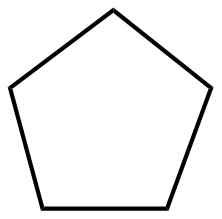
- Cyclo- is added in front of the parent chain. If a parent chain is a loop standard naming rules apply.

Cyclopentane
- Here are two ways to draw a cyclic.
Line Diagram
Condensed Structural Diagram

- Numbering can start anywhere and go Clockwise or Counterclockwise on the loop but side chain numbers must be the lowest possible.
Example:
1,3,5 trimethyl cyclohexane

- Loops can also be a side chain
- Some rules apply but the side chain is given a cyclo- prefix
Example:
2 cyclopropyl 2 pentene

Aromatics
- Benzene (C6H6) is a cyclic hydrocarbon. (Careful analysis shows that all C-C bonds are identical and really represent a 1.5 bond.

Examples of Benzene:

Aromatic Nomenclature
- Abenzene molecule is given a special diagram to show its unique bond structure
- Benzene can be a parent chain or a side chain.
- As a side chain it is given the name "Phenyl"

Examples:
1,2,3,4,5 pentamethyl benzene

1 bromo 4 phenyl butane

Monday, 2 April 2012

Intermolecular Bonds!

There are two types of Bonds: INTRAmolecular bonds and INTERmolecular bonds.

Intramolecular: Exist within a molecule such as Ionic and covalent bondings.
Intermolecular: Exist between molecules. There are two types of Intermolecular bonds: Van der Waals bonds and hydrogen bonds.

Van der Waal Bonds:
- This bonding is based on electron distribution.
- Dipole-Dipole bonds: positive is attracted to negative end. Only occurs in polar molecules.

London Dispersion Forces: (LDF)
- LDF is present in all molecules
- These are the weakest bonds
- If a substance is non-polar Dipole-Dipole forces doesn't exist.
- Electrons are free to move around and will randomly grouped on one side of the molecule.
- This creates a temporary dipole and can cause a weak bond to form.
- The more electronegativity in the molecules the stronger the LDF can be.

Hydrogen Bonding:
- If hydrogen is bonded to certain elements (F,O,N) the bond is highly polar
- This forms a very strong inermolecular bond.

Tuesday, 28 February 2012

Dilutions!

Dilutions are when two solutions are mixed making the conentration change. It is the process of decreasing the concentration by adding a solvent (usually water). Dilution can be expressed as the formula (n1 = n2) (C1V1 = C2V2.

To do a dilution problem, Mr. Doktor told us to always write down what we are given.

For Example:
"Determine the cocentration when 100mL of 0.10M Hcl is diluted to a final volume of 400mL"

Step 1: First write down all given data
Step 2: Manipulate the equation
Step 3: Plug in data to the variables
Step 4: Solve

V1 = 100mL V2=400mL C1=0.10M

(100)(0.1)/400 = 0.025M

Therefore the C2 is 0.025mol/L

<b> This video explains how to do indepth Dilution equation </b>

Monday, 30 January 2012

Mass to Mass Conversions!

Mr. Doktor explained to us how Mass to Mass conversions worked. It has a similar concept from Mole to Mole conversions but with an additional step:

Grams of A >>> Moles of A >>> Moles of B >>> Grams of B

Example 1:
How many grams of chlorine from the decomposition of 64.0 g. of AuCl3 by this reaction:
2 AuCl3 ---> 2 Au + 3 Cl2

Step 1: Convert Mass A to Moles A: 64.0g x 1mol/303.32g
Step 2: Convert Moles A to Moles B: 0.211mol x 2/3
Step 3: Convert Moles B to Mass B: 0.316mol x 70.906g/1mol = 22.4g

Example 2:
Lead (IV) Nitrate reacts with 5.0g of Potassium Iodide. How many grams of Lead (IV) are required?

Step 1: Write a Balanced Chemical Equation: Pb(NO3)4 + 4KNO3 + PbI4
Step 2: Convert Mass A to Moles A: 5.0g x 1mol/283.3g = 0.0176mol
Step 3: Convert Moles A to Moles B: 0.0176mol x 1/4 = 0.0044mol
Step 4: Convert Moles B to Mass B: 0.0044mol x 327.2g/1mol = 1.4g

Here is a video futher explaining Mass to Mass conversions:

Wednesday, 7 December 2011

Density & Moles!

The formula for Density is:
d=m/v

The conversion between Density and Moles is a two step process.

Example:
How many moles are in a 25.0mL sample of Iron if the density of Iron is 7.87g/mL

Step 1: Convert from Density to Mass using the equation.
25.0mL x 7.87g/1mL = 197g

Step 2: Convert from Mass to Moles using Molar Mass
197g x 1mol/55.8g = 3.53mol

Tuesday, 29 November 2011

Multistep Conversions!

Multistep conversions can be used to figure out the mass, moles, volume and even molecules and atoms in a certain chemical equation.

Mass to Volume:
Step 1: Convert mass to moles.
Step 2: Convert moles to volume.

Mass to Molecules:
Step 1: Convert mass to moles.
Step 2: Convert moles to molecules.

Mass to Atoms:
Step 1: Convert mass to moles.
Step 2: Convert moles to molecules.
Step 3: Convert molecules to atoms.

Volume to Mass:
Step 1: Convert volume to moles.
Step 2: Convert moles to mass.

Volume to Molecules:
Step 1: Convert volume to moles.
Step 2: Convert moles to molecules.

Volume to Atoms:
Step 1: Convert volume to moles.
Step 2: Convert moles to molecules.
Step 3: Convert molecules to atoms.

Examples:
1. 5.1g x 1mol/79.9g x (6.02x10^23)/1mol = 3.8 x 10^22
2. 3.62x10^24 x 1mol/(6.02x10^23) x 320g/1mol = 192g
3. 2.94x10^24 x 1mol/(6.02x10^23) x 142g/1mol = 693g

Sunday, 27 November 2011

Converting between Atoms/Molecules & Moles!

It takes one step to convert from Moles to Molecules and two steps from Moles to Atoms.

Moles to Molecules:
The conversion factor for moles to molecules is Avogadro's number (6.02 x 10^2)

Example:
How many water molecules are there in 0.65mol?

Step 1: Lay down conversion equation.
0.65mol x 6.02x10^23molec / 1mol = ???
Step 2: Multiply by Avogadro's number and divide by 1mol (to cancel the mol).
0.65mol x 6.02x10^23molec / 1mol = 3.9x10^23 molec

Moles to Atoms:
Convert Moles to Molecules first by using Avogadro's number as a conversion factor then use subscripts

Example:
How many oxygen atoms are in 3.9x10^23molec?

Step 1: Lay down conversion equation.
3.9x10^23molec x 2atoms/1mol = ???

Step 2: Multiply the molecules by the number of subscripts.
3.9x10^23molec x 2atoms/1mol = 7.8x10^30 oxygen atoms.

Monday, 21 November 2011

Converting from Moles to Mass!

Mr. Doktor explained to us how to convert Moles into Mass.
The mole being converted is multiplied by mass/1 mol.

Ex:
0.89mol x 111.1g/1mol = 98.88g
1.112mol x 20.0g/1mol = 22.2g
0.159mol x 60.1g/1mol = 9.56g

Mr Doktor also showed us how to convert Mass into Moles.
The mass being converted is multiplied by 1 unit of mass/mol.

Ex:
158.1g x 1mol/303.3g = 0.5213mol
362.8g x 1mol/72g = 5.04mol
12.35g x 1mol/58.0g = 0.140mol

The 1mol is either on the top or bottom so that units can cancel.

Wednesday, 2 November 2011

Naming Compounds Part 2!

Today Mr Doktor explained to us how to name molecular compounds, acids and bases. There are various rules for naming these compounds:

Molecular Compounds:
- There are 7 Diatomic molecules: H2, N2, O2, F2, Cl2, Br2, I2
- There are 2 Polyatomic molecules: S8, P4

Rules for naming a molecular compound:
- Use the name of the first element
- Second element ends in -ide
- 1st atom usually does not have a prefix (Ex. NO -> Nitrogen monoxide)
- Hydrogen doesn't have a prefix (Ex. H2S -> Hydrogen sulfide)
- Some compounds are to be memorized:

IUPAC Name Formula
Water H20
Hydrogen Peroxide H2O2
Ammonia NH3
Glucose C6H12O6
Sucrose C12H22O11
Methane CH4
Propane C3H8
Octane C8H18
Mathanol CH3OH
Ethanol C2H5OH

Naming Acids:
- Hydrogen compounds are acids (Ex. HCl -> Hydrochloric acid, H2SO4 -> Sulphuric acid)
- Hydrogen appears first in the formula unless it is part of a polyatomic group (Ex. CH3OOOH -> Acetic Acid)
- Classical rules use the suffix -ic and/or the prefix hydro- (Ex. Sulphuric acid, Hydrochloric acid)
- IUPAC system uses the aqueus hydrogen compound (Ex. HCl (aq) -> Aqueous Hydrogen Chloride)

Naming Bases:
- Cation and OH (Ex. NaOH, Ba(OH)2)
- Use the cation name followed by "hydroxide" (Ex. Sodium Hydroxide, Barium Hydroxide)

Some Acids and Bases:
Acid/Base Compound
Hydrochloric Acid HCl
Nitric Acid HNO3
Suphuric Acid H2SO4
Phosphoric Acid H3PO4
Acetic Acid CH3COOH
Ammonia NH3

Wednesday, 19 October 2011

Isotopes and Atoms!

Today we learned about atoms and isotopes. No atom is perfectly the same; some atoms have variations of mass (due to the difference in neutron number) and these are called isotopes. We also learned how a spectrometer works and how it gets the average of the different isotopes.

Important Definitions
Atomic Number - Number of protons in an atom
Isotopes - Same atomic number but different mass
Spectrometer - are used to determine the abundance and mass of the isotopes of elements

Isotopes of Hydrogen


Spectrometer: Calculating averages


We have in the image shown above the relative abundances of europium. To find the average mass we need to do a series of calculations...

Step 1: Multiply the percentage (convert to decimals) with the mass number
151(0.478) + 153(0.522) = Average Mass
Step 2: Add the results
72.178 + 79.866 = Average Mass
Step 3: You get your average
152.0 = Average Mass of Europium

*Check the periodic table! Europium has an atomic mass of 152.0!

Tuesday, 4 October 2011

Atomic Thoeries!

Today we learned about many atomic thoeries throughout history. An atomic thoery relates idea/thoeries about small particles such as atoms, protons, and electrons.

These are some of the atomic thoeries we learned today:

Atomic Thoery Main Features Diagram Shortcomings/Problems
Democritus 300 BC Talks about the atom as the smallest particle of matter.

Defines the atom as an indivisible particle

Explains certain natural occurrences such as the existence of elements

Atom the indivisible particle Atomos (in ancient Greek) means "that which cannot be further broken down into smaller pieces".
Does not give a scientific view of the atom only a conceptual definition

Does not talk about subatomic particles
(Electrons, Protons, Neutrons)

John Dalton 1800s
Explains a lot of chemical properties such as how atoms combine to form molecules

Explains chemical change better than the Particle Theory

Confirms the basic Laws of Chemistry: Conservation of Mass & definite Proportions

The solid sphere model

Atoms are seen as solid, indestructible spheres (like billiard balls)

Does not include the existence of the nucleus

Does not explain the existence of ions or isotopes

Does not talk about subatomic particles
(Electrons, Protons, Neutrons)

J.J. Thompson 1850s
Infers on the existence of electrons and protons

Introduces the concept of the nucleus

Infers on the relative nuclear density and atom mass of different atoms

The raisin bun Model or the
chocolate chip cookie model :
Atoms are solid spheres made-up of a solid positive mass (or core) with tiny negative particles embedded in the positive core.

Does not explain the existence of electrons outside the nucleus does not explain the role of electrons in bonding

Does not talk about neutrons therefore can't explain radioactivity and the existence of isotopes

Rutherford 1905
First real modern view of the atom

Explains why the electron spins around the nucleus

Proposes that the atom is really mostly empty space
The Planetary Model
Famous Gold Leaf Experiment proves that the nucleus is positive and the electrons are outside the nucleus.
Does not place electrons in definite energy levels around the nucleus

Doesn't include neutrons in the nucleus

Does Not relate the valence electrons atomic charge

Neils Bohr
Explains the role of valence electrons in bonding

Relegates the number of valence electrons to the Periods of a periodic table

Fully explains ionic and covalent bonding

Places electrons in definite energy levels

2 e- in the first

8 e- in the second

8 e- in the third


Electrons in Definite energy Levels around the nucleus

Used atomic spectra to prove that electrons are placed in definite orbitals (called shells) around the nucleus.
It does not explain the shapes of molecules or other abnormalities that result form unevenly shared pairs of electrons (such as the abnormal behaviour of water, the difference in Carbon-Carbon Bonds between diamond and graphite etc..)

Thursday, 22 September 2011

SI Units and Error in Physics!

Today Mr. Doktor introduced us SI units and it's prefixes. The SI prefixes indicate how much multiplier (by 10) a unit is measured. For Example: a unit of 1000 can be indicated as 10^3 or in other words "a kilo". These prefixes can be find anywhere from computers to cameras and to any measuring device (Terabyte, kilogram, megapixel, etc.).
These are some of the prefixes in SI Units (and its multipliers):


Error is an unescapable part of science. Measuring instruments are never completely free of flaws and measuring always involves estimation. Three reasons error might ovvur in an experiment could be: The measuring instrument has a flaw, estimates of the human maybe wrong, or chaning ambient conditions of the surroundings may change.
We also learned about Absolute Error and Percent Error. Absolute error and percent error are used to determine how precise and accurate something is.
The formula for Absolute Error is:
Absoulte Error = Measured Value - Accepted Value
The formula for Percent Error is:
Percent Error = [(Measured Value - Accepted Value) / Accepted Value] x 100

Saturday, 10 September 2011

Lab Prep! Rules and Safety in the Laboratory 101

Today for class, Mr Doktor explained to us various Safety procedures when doing an experiment in the laboratory. He made us get into groups and create our own "Top 10 Safety Rules" to help create an official safety list for the class. During the class he also showed us a video which enlightened us how not applying safety precautions during experiments can lead to dangerous or even deadly consequences. So overall, in today's class we learned that we should learn the proper safety precautions in a lab to ensure our safety and others as well.

An example of a Top 10 Science Safety that was made:
1. Wear lab coats and safety goggles
2. No horseplay (running)
3. No touching, tasting, directly smelling chemicals
4. Listen to everything Mr. Doktor says
6. No eating during lab experiments
7. Raad labels before using chemicals
8. Don't leave an experiment unattended (especially Bunsen Burners)
9. Use the appropriate procedures in an emergency
10. Alert Mr. Doktor if anyone is hurt or if something breaks