Showing posts with label Posted by: Suban Selvakumaran. Show all posts

Friday, 4 May 2012

Amines, Amides, and Nitro!


                                                     Amines, Amides, and Nitro!


  1. Amines are functional groups that contain a Nitrogen compound bonded to either Hydrogens and Carbons.Also, amines are alphabetically named. There are three levels of Amines:
  • - Primary Amines have 1 carbon bond
  • - Secondary Amines have 2 carbon bonds
  • - Tertiary Amines have 3 carbon bonds


Ex.      


Ex.
  1. Draw the following for
  • 1) ethyl methyl amine

  • 2) trimethyl amine


Amides must have a double bonded oxygen and an NH2. The endings for Amides are "-amide".
 
One of the simplest amide is ethanamide.
 
Nitros have the funtional groupd of NO2. Also when naming a nitro, we add "Nitro" to the beginning of the name.


Monday, 16 April 2012

Alkenes and Alkynes: Double and Triple Bonds


                                       Alkenes and Alkynes: Double and Triple Bonds

          Today in chemistry class, we learned about double and triple bonds with Carbon atoms.


  1. Carbon can form double and triple bonds with Carbon atoms. When multiple bonds form, fewer Hydrogens are attached to the carbon atom. Naming rules are almost the same as with alkanes.

  • The position of the double/triple bonds always has the lowest number and is put in front of the parent chain.
  • Double bonds (Alkenes) end in -ene. Triple bonds (Alkynes) end in -yne.

          Ex.


   Ex.     


EX:

What is the name of this alkene?


What is the name of this alkyne?


Multiple Double Bonds:

More than one double bond can exist in a molecule. Use the same multipliers inside the parent chain.


Trans and Cis Butene:

If two adjacent carbons are bonded by a double bond and have side chains on them two possible compounds are possible.


Thursday, 29 March 2012

POLAR MOLECULES


Today in Chemistry class, we continues our discussion on Polar Molecules from last class.    
                     
        o       Polar Molecules have an overall charge separation.
        o       Unsymmetrical molecules are usually polar. 

              
o       Molecular dipoles are the result of unequal sharing of electrons in a molecule. A perfect example of this would be water bending, which Mr. Doktor demonstrated in class. Here’s a video showing it : 


o       If a molecule is symmetrical the pull of e- is usually balanced.
o       Molecules can be un-symmetrical in two ways :
*    Different Atoms
*    Different number of Atoms

-         Ex. Find the Polarity


Wednesday, 7 March 2012

Acid/Base Reactions!

Today in chemistry class we learned about pH and P0H, we also had visitors in class watching as we used our phones to text Mr. Doktor our answers for the in class problems.

Our 1st class problem was:


2000mL of 0.02 M NaOH represented our simulated lake and 150mL of 0.30 M HCl represented our simulated acid rain.

First we had to determine the pH of the acid rain and the pOH of the lake.

Determining the pH of the acid rain:

HCL -> H+ + Cl-

0.30 M x 1/1 = 0.30 M
-log(.30 = 0.52 = pH

Determining the pOH of the lake:

NaOH -> Na+ + OH-

0.02M x 1/1 = 0.02M
-log(0.02 = 1.7 = pOH

Determining the pH of the lake after acid rain has fallen on it:

HCl + NaOH -> NaCl + HOH

0.30mol/L x 0.150L = 0.045mol HCl

0.02mol/L x 2.00L = 0.04mol NaOH

0.045 - 0.040 = 0.005 mol

0.0050 x 1/2.15 = 0.002326M

-log(0.002326 = 2.6 = pH

Then we had to do another in class problem:


50.0mL of 0.150M H2SO4 reacts with 100mL of 0.100M Ba(OH)2


a) Determine the L.R.

H2SO4 -> 2H+ + SO4-2

0.150mol/L x 0.050L x 2/1 = 0.015mol of H, 0.015 x 1/2 = 0.0075mol of H2SO4

Ba(OH)2 -> Ba+ + 2OH-

0.100mol/L x 0.100L x 2/1 = 0.02mol of OH, 0.02 x 1/2 = 0.01mol of BaOH

H is L.R.


b) How much Ba(OH)2 is left after the reaction is completed

0.01 - 0.0075 = 0.0025 mol of BaOH is left

0.0025mol x 1/.150 = 0.017M


c) Determine the [Ba(OH)2] and [OH]

[Ba(OH)2] = 0.0025mol x 1/0.150 = 0.017M

[OH] = 0.017M x 2/1 = 0.034M


d) What is the pOH of the solution?

-log(0.034 = 1.48 = pOH


e) What mass of BaSO4 is produced?

0.0075mol x 1/1 x 233.4/1 = 17.5g of BaSO4

Friday, 24 February 2012

Titration of Vinegar Lab!


Today in Chemistry class, we did a lab to figure out the Molar Concentration of Acetic Acid in   household vinegar.
1. For the lab we set up a buret on a lab-stand with a clamp.
2. We filled the buret with 0.50M NaOH, and filled an Erlenmeyer flask with 10mL of vinegar and put two drops of Phenolphthalein Indicator in it. 
3. Then we recorded the initial volume of the NaOH in the buret, and then added the NaOH to the vinegar and swirled the flask until the solution turned light pink.
4. We then recorded the final volume to find the total amount of NaOH added in the trial.

   * We did this more than once.


Trial                                                1                           2

Initial Volume                              7.8                         24.2

 (mL)

Final Volume                               24.2                      40.8

 (mL)

NaOH Added                               17.0                    17.2

(mL)


 5. Then we got the average volume of NaOH added.
       17.0 + 17.2 / 2 = 17.1 mL
6. We finally determined the concentration of Acetic Acid using the balanced equation from the reaction of NaOH and CH3COOH.
NaOH + CH3COOH = H2O + NaCH3COOH
0.50mol/L x 17.1mL x 1/1 = 8.6mmol
8.3mmol x 1/10 mL = 0.86M
The accepted value for the concentration of household vinegar is 0.85M.
% error = 0.86 – 0.85 / 0.85 x 100 = 1% error.


For a better understanding of what we did today in class, here is a video demonstrating our lab.


Thursday, 2 February 2012

Energy + Percent Yield

In today's class we learned how to calculate energy and also Percent Yield. Percent yield is basically the amount of products that should be formed in a reaction.

- Enthalpy is the energy stored in chemical bonds
- Symbol of Enthalpy is H
- units of Joules (J)
-Change in Enthalpy is ∆H
-In Exothermic reactions, enthalpy decreases
-In Endothermic reactions, enthalpy increases


Calorimetry:
-To experimentally determine the heat released we need to know 3 things:
1. Temperature change (∆T)
2. Mass (m)
3. Specific Heat Capacity (C)

They are all related by the equation:
∆H= mC∆T

e.g. Calculate the heat required to warm a cup of 700g of water (C= 4.18J/g°C) from 40.0° to 60.0°.
ΔH = mCΔT
= (700) (4.18) (20.0)
= 58 520 J / 1000
= 58.5 kJ


80.0 kJ of heat are added to a 700g glass of water initially at 40.0°C. Calculate the final temperature of the water (C= 4.18J/g°C).
ΔT = ΔH / Mc
= (80 000) / (700) (4.18)
= 27. 3°C
= 27. 3°C + 40.0°C
= 67.3 °C


Percent Yield
- The Theoretical yield of a reaction is the amount of products that should be formed
- Actual amount depends on the experiment
- The percent yield is like a measure of success
- How close is the actual amount to the predicted amount

Percent Yield = (Actual/ Theoretical) x100

e.g. Determine the percent yield for the reaction between 3.74 of Na and excess O² if 5.34 g of Na²O² is recovered

2Na + O2 > Na2O2

3.24 x 1mol/23.0g x 1/2 x 78.0/1mol = 6.34g

% yield = 5.34/6.34 = 84%


Monday, 23 January 2012

Mole to Mass and Mass to Mole Conversions


Today in chem. class, Mr. Doktor taught us an additional step from last class, which allows us to determine the mass from an amount of moles or vice versa. Following this chart will help you make the right conversions from “A” to “B”.


Example: How many grams of Bauxite (Al2O3) are required to produce 3.5 mol of pure aluminum?


The balanced chemical equation: 2Al2O3 = 4Al + 3O2


3.5mol * (2/4) * (102g/1mol) <- (molar mass) = 178.5 g = 1.8*10^2g


Example: How many grams of water are produced if 0.84 mol of Phosphoric Acid is completely neutralized by Barium Hydroxide?


The balanced chemical equation: 2H3PO4 + 3Ba(OH)2 = Ba3(PO4)2 + 6H2O


0.84mol * (6/2) * (18g/1mol) <- (molar mass) = 45g


There is no way to go from the mole of one substance to the mass of another directly.


YOU ALWAYS NEED TO CONVERT TO MOLES FIRST.

Thursday, 5 January 2012

Percent Composition!

Today in chemistry class, Mr. Doktor taught us about percent composition by mass. We learned how to figure out the percent by mass of each element in a compound.


* To relate the mass of each element in a compound to the entire mass of the compound we use percent composition.


Example. H20--------- (2) molar mass of hydrogen in the compound / (18) total molar


mass of the compound = 0.111 = 11.11% of hydrogen


(16) molar mass of oxygen in the compound / (18) total molar mass of the compound


= 0.889 = 88.89% of oxygen


* To check your answer, add up all the percents and if the sum is 100 you did it right.


* 11.11%

+

* 88.89%


= 100%

Thursday, 17 November 2011

Molar Mass!

Today during chemistry class, Mr. Doktor taught us how to find the molar mass of a substance and a compound.

•The mass (in grams) of 1 mole of a substance if called the molar mass.

•It can be determined from the atomic mass on the periodic table.

•It is measure in g/mol

Ex. Iron(Fe) – 55.8 g/mol
Ex. Oxygen (O2) – 2(16) = 32.0 g/mol


Molar Mass of Compounds

• To determine the molar mass of a compound add the mass of all the atoms together.

Ex. NaCl-------- 23 + 35.5 = 58.5 g/mol
Ex. AlCl3------- 27 + 3(35.5) = 133.5 g/mol

Friday, 28 October 2011

Naming Compounds!

Today during class, Mr.Doktor taught us how to name compounds and we went over the following:

Chemical Nomenclature

• Today the most common system IUPAC- most chemicals.
- Ions
- Binary Ionic
- Polyatomic Ions
- Hydrates
- Molecular Compounds
- Acids/Bases

Chemical Formulas

• Be aware of the difference between ion and compound formulas.

Examples

Zn^2+…………. ion charge (Zinc Ion)
BaCl2…………..number of ions (Barium Chloride)

Non-Metal Ions
F-………………Fluoride Ion
N^3-……………Nitride Ion
O^2-……………Oxide Ion

AlF3………….Aluminum Fluoride
Na2O…………Sodium Oxide
Fe2S3…………Iron (III) Sulfide

Multivalent Ions

• Some elements can form more than one ion.
- Iron Fe^3+ or Fe^2+
- CopperCu^2+ or Cu^1+
• The top number on the Periodic Table is more common.
• IUPAC uses roman numerals in parenthesis to show the charge.
• Classical(i.e. old) systems uses Latin names of elements and the suffixes –ic (larger charge) and –ous(smaller charge)

Examples

Fe^3+…..Ferric Oxide (Fe2O3)
Fe^2+….Ferrous Oxide (FeO)

Other Classical Names

• Ferr-Iron
• Cupp-Copper
• Mercur-Mercury
• Stann-Tin
• Aunn-Gold
• Plumb-Lead
• Wolf-Tungsten
• Argent-Silver

Old Greek Way

Argentous OxideAg2O
Cuppric Sulfide CuS

IUPAC

CuCl2- Copper (II) Chloride
Cr2O3- Chromium (III) Oxide

Hydrates

• Some compounds can form lattices that bond to water molecules.
• Copper Sulfate
• Sodium Sulfate
• These crystals contain water inside them which can be released by heating,

• To Name Hydrates:

- Write the name of the chemical formula.
- Add a prefix indicating the number of water molecules (mono=1, di=2, tri=3 etc.)
- Add hydrate after the prefix.

Examples

Cu (SO4) •5H2O……….Copper (II) Sulphate Pentahydrate (5 Water)
Li (ClO4) •3H2O………Lithium Hypochlorite Trihydrate (3 Water)

Monday, 17 October 2011

Quantum Mechanics

Today in chemistry class we compared the bohr theory and the quantum theory. Mr. Doktor then taught us about electron configuration and the different orbitals. It was confusing but after doing a lot of examples it was clear and we understood what the it was about.


Bohr Theory
- The electron is a particle that must be in orbital in the atom.

Quantum Theory
- The electron is a cloud of negative charge or a wave function.
- Orbitals are areas in 3D space where the electrons most probably are.
- The energy of the electrons is in its vibrational modes- like notes on a guitar string.
- Photons are produced when high energy modes change to lower energy modes.

S Orbitals

- Each orbital holds 2 electrons

P Orbitals

- There are 3 suborbitals
- Each contains 2 electrons
- Total electrons = 6

D Orbitals

- There are 5 suborbitals
- Each contains 2 electrons
- Total electrons = 10


F Orbitals

- There are 7 suborbitals
- Each contains 2 electrons
- Total electrons = 14

Monday, 3 October 2011

Density & Graphing!

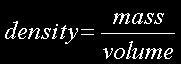
Today in Chemistry Class, we learnt about Density and Graphing. We learnt that the density of an object is its mass divided by its volume or the equation of:


*Density is usually expressed in Kg/L, Kg/m3, or g/cm3

Graphing (5 important things to remember)

1. Labeled axis

2. Appropriate scale

3. Title

4. Date Points

5. Line of Best Fit

3 things can be done while we work with graphs and that is

* Read the graphs

* Find the slope(rise/run)

* Find the area of the graph

example of a properly constructed graph:


Tuesday, 20 September 2011

Homogeneous and Heterogeneous Substances!

In today’s class, Mr. Dockor had briefly gone over a few of the balancing word equations from our homework that’s due next class. After that we had moved on to how we name matter helps us understand it. We learnt that matter can be divided into 2 types, Homogeneous Substances and Heterogeneous Substances. The two types of matter can also be broken further down into smaller groups such as pure substances, elements, compounds, mixtures, solutions and such displayed in the diagram below. Near the end of the class we also saw an example of how a mixture can be separated.

Homogeneous: consists of only one visible component (eg. distilled water, oxygen, graphite)

Heterogeneous: contains more than one visible component (chocolate chip cookie, granite)

2 types of pure substances:

Elements- substances that can’t be broken down into simpler substances by chemical reactions (any element)

Compounds- 2 or more elements that can be changed into other compounds by chemical reactions. (Water, sugar)

Solution- a homogeneous mixture of 2 or more substances (Fog, Steel)
-the component present is greater amounts is the solvent and in smaller amounts is the solute.

Mixtures- heterogeneous mixtures have different parts to it that is clearly visible (blood, sand)
- 5 different ways to separate mixtures
- by hand
- filtration
- distillation
- crystallization
- chromatography